Leading with Empathy

As a leader, you make a choice on what your style is going to be. Do you want to be feared? Do you want to be respected? Do you want to be beloved? Do you want to be relatable?

This is something I have been thinking about a lot, especially lately. Employee retention becomes increasingly more difficult in this pandemic environment and loyalty seems to be out the window. For example, while I was out on my 20-week maternity leave, we lost 6 people on my team, which equates to about one third of the staff. I looked at the list and tried to come up with commonalities. The big ones were that most losses had started with my company during the pandemic in a “virtual world”, and that the individuals were more likely to be those with whom I didn’t have strong personal relationships. By contrast, those with whom I have formed these personal relationships have remained committed to the team and excited for the futre.

But how do you get loyal team members? It is certainly a balance, and no leader can be perfect every day. Part of it is setting high, yet achievable, expectations for your team members. And those expectations must vary person by person based on current abilities, future potential, and speed of growth potential. Staying committed to that career path for your team members is important too. While I like to say that everyone is responsible for their own path and destiny, the reality is that few people have the vision or feel the permission to even lay that out themselves and stay committed to it day in and day out. They are looking for a leader to say “I see this for you” or “I see these options for you, and I am committed to helping you achieve your potential.”

I recently worked with the leaders on my team to lay out the hard and soft skills required for each level/title, focusing heavily on the Junior, Analyst, and Senior Analyst roles, where I felt employees probably needed the most guidance. These skills were across several key criteria areas, including analytics skills, communication skills, creative skills, etc. We also launched our first Marketing Science team “Bootcamp” that is occurring as we speak, focused on our newest hires, while inviting all other team members to attend who either need to refresh their knowledge on a tool or capability or who never learned that skill in the first place. The Bootcamp will take place over a 4-week period, touching topics like our subscription services, pulling data, understanding key metrics, and running some of our fundamental analytics. The responsibility for building out the materials fell on a wide range of team members and focuses on teaching the material, workshopping the content, assigning a set of example exercises, and reviewing the results to those exercises a few days later. I am really excited about this focus on gaining a set of skills, regardless of the level you are hired at within our agency. I look forward to seeing how it can be expanded to other departments and set the gold standard for training and onboarding.

One of my other big initiatives for my team this year has been “vision sprints.” I realize that we all get so caught up in our day-to-day deliverables, working with the same people on the same things. I wanted to get the team excited about driving future innovation and partnering with new team members on areas that may be outside their comfort zone. So, on one of our first team meetings of the year, I walked the team through my vision for Marketing Science for 2022. It ended with my 5 big bucket priorities, surrounding things like automation, presentation skills, insights & storytelling, and dashboard visualization standardization. I had team members sign up for their areas of interest, put the team in groups of three and left it to them to set up regular check-ins. The goal will be to all share back progress at the end of Q1, decide on next steps, and potentially hand off the work to date and swap the teams to continue making progress with fresh eyes and ideas. I hope that this will drive ownership and allow for more creativity than the team may feel in their day-to-day work. I also hope that it can drive some of the “water cooler conversations” that we are all missing out on in this virtual world, as the team connects regularly in small groups outside of their daily teams.

I share these examples just to show some of the very real, tangible ways I try to lead my team with ideas and support. These are the work-related ways I show I am invested in their careers and their growth. The ways I start to show I care. But these are just the start of being a good leader in my opinion. There are so many other pieces that are harder to put in a box but can be just as important.

It’s taking the time to give my point of view on graduate degrees, the pros and cons of going to business school, going part-time vs. full-time, going to top ten vs. non-top ten programs and more, to a junior team member who is trying to find her way. It is fighting the good fight day in and day out to make sure leaders hear about the great work and client kudos my Senior Analysts and VPs are getting and then not letting them fall between the cracks when it comes time for promotions and raises. It is making sure that each team member is known, both by me through monthly or bi-weekly 1:1s no matter how busy my schedule or how junior their level might be, as well as by other senior business leaders. It is checking in, asking questions about their days, getting to know about their family and home life (as much as they want to share of course) and following up on things that are important to them. It is sharing my own life updates about my kids, my dogs, my husband, and letting myself be vulnerable to them in terms of the things going on in my home and my life outside of work hours so that they might feel comfortable doing the same.

I think one of the most important things I have done as a leader, for my team and beyond, is giving people permission to set boundaries, to prioritize their families over their work without apology and to realize that it is possible to be a hard worker with huge impact but to still say “no” sometimes. This was a lesson that was hard for me to learn, especially in the early years of my career. I felt like I could never say “no”, that that would say something about me as a “team player” and that the opportunities would stop coming.

I’ve learned that that isn’t true at all. I recently talked to a co-worker about the endless slew of meetings in this pandemic world. When we are all working from home on different time zones, the meetings starting at 7 AM and going until 6 PM have started to feel like the norm. It is up to us to take our personal lives back and make it clear that that isn’t good enough, this can’t be the norm. I told him that 5-8 PM are my core hours with my children that I am not willing to compromise on. Of course, there are exceptions because life isn’t black and white, and we must be flexible. So, if there’s an important client meeting or pitch preparation that can’t be moved, my family and I find ways to make it work. But that must be the exception, not the rule. My fellow leaders know that and don’t question it. This co-worker told me that once he saw my lead on this, he felt comfortable following. My move gave him permission to set his boundaries when he had to be at home to be there for his daughter as well.

This same co-worker has been dealing with some very big personal challenges lately, and so I reached out to him with my most honest, authentic support, letting him know that I am there as a friend, as a human who cares about his well-being. One might say that this goes outside of the responsibility of a co-worker, but I would argue that it is one of my most important places that empathy can come from. Your co-workers and your team members know you so well; they spend such a high percentage of your waking hours with you. And they know many of the challenges you face from a work perspective. Being able to round that out with your personal challenges can really help them to see where you are coming from and partner with you in even more meaningful ways.

I have personally been through a lot in my life, and I know that those things impact me every day. Sometimes my personal life motivates me and gives me an extra spring in my step at work. And sometimes the challenges, the struggle, the sadness can be so overwhelming that I am not the best version of myself, and it means my work isn’t as good, or I am short with someone. That self-awareness allows me to empathize with others on my team or other teams and to realize that there is so much more that impacts a person every day beyond the work that sits on their computer screen.

And at the end of the day, I truly believe that those who lead with empathy are the most likely to grow their influence in a positive way. The relatable leaders who truly care about the people and getting to know what’s inside, those are the people I want to work for. Those are the people I want to emulate. That’s the person I hope to be…. The leader I hope I am.
Decimating My Village

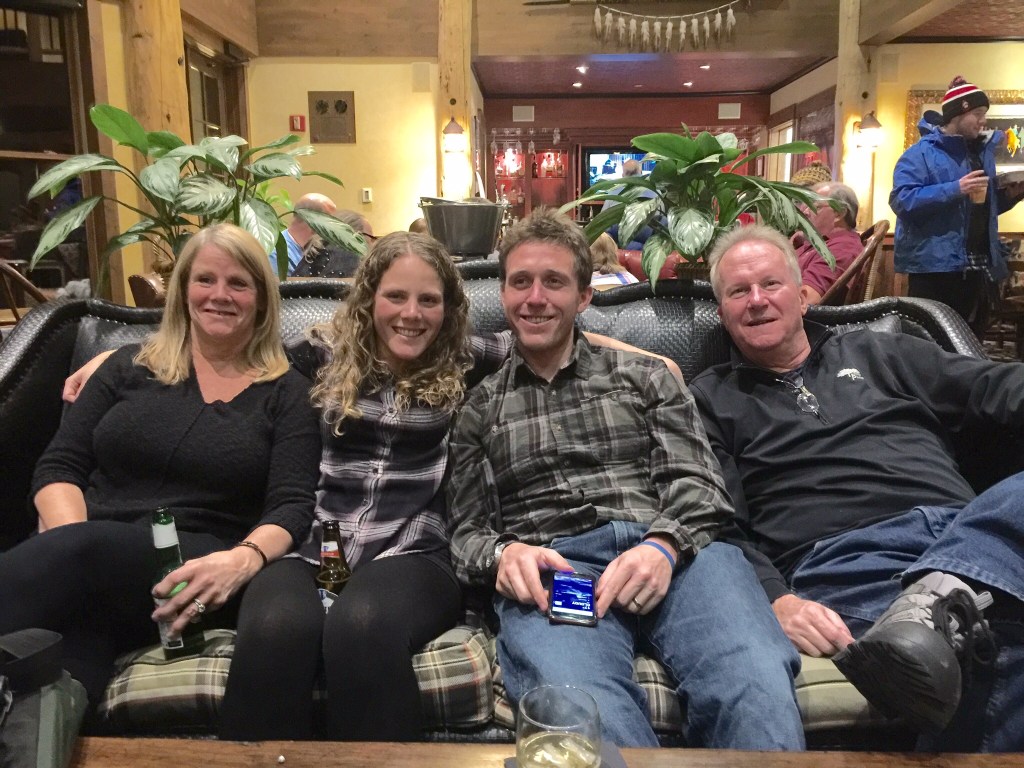
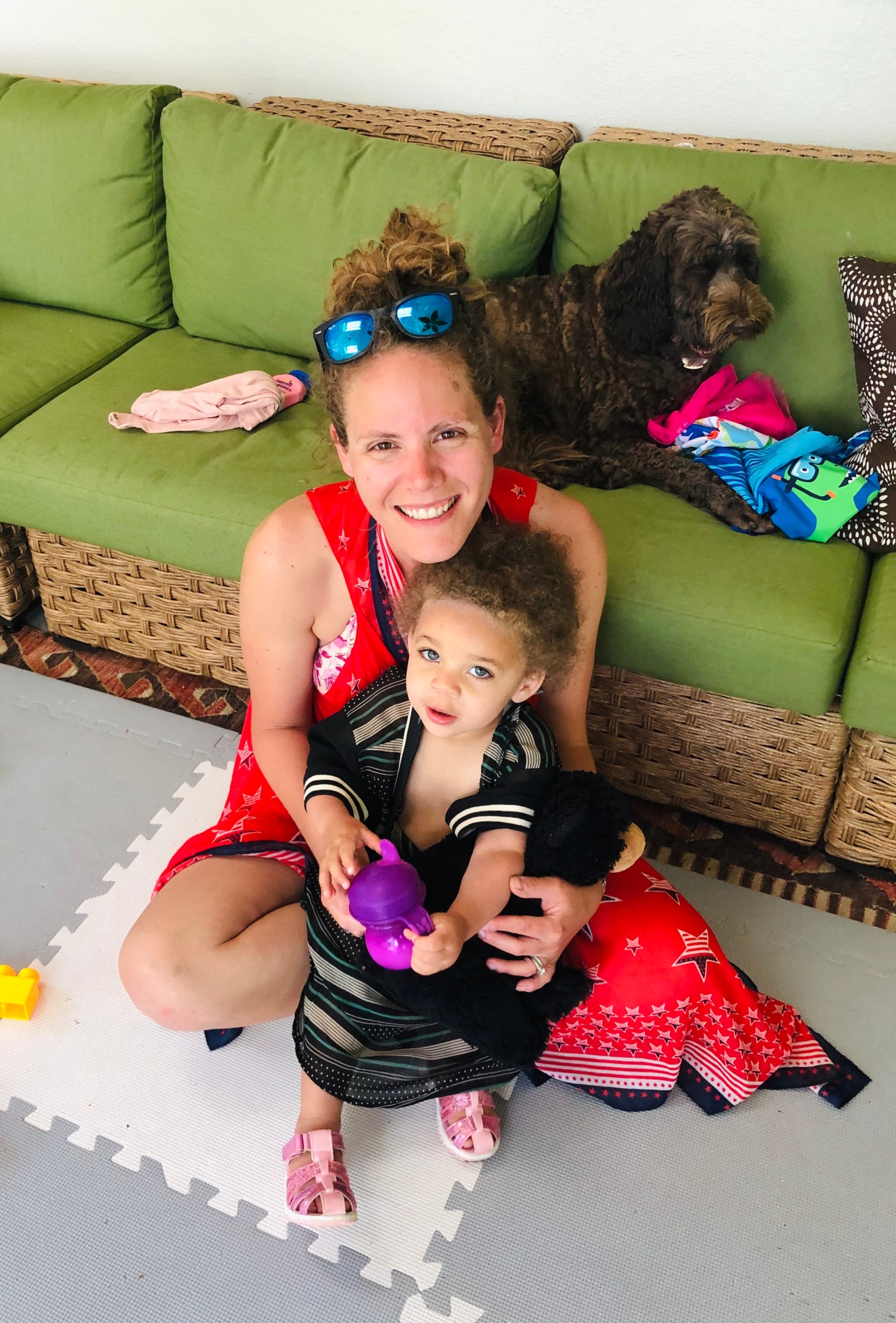
Mom, Me, George, and Tom- Jackson Hole 2016

So, a few months ago, I decided to write this blog: “Business and Babies.” I felt that a little over a year into my motherhood journey, I had life experiences across a myriad of topics that I could share with other working moms. I believed I had advice on how to “do it all” and, more importantly, be good at it all (something that is very important to me). And I know that is still true. But I have also seen so much change in the past 9 months since I wrote that first post, both in the world and in my personal life. In late February, coming off of a business trip, I had prepared an entry on traveling for work when you have a family. I had suggestions on how to balance making your client felt like you had put his/her needs first, catching the latest outbound flight while still making it in time for the meeting, and squeezing your way into the last standby spot for the earliest flight back home. I was going to discuss the benefits of my home location: less than 15 minutes from ORD. And I was going to talk about the importance of building your village (your support system) to be there for you and your kids when you can’t be.

I had written:

“One thing that helps me to make it all work is my support system. Our au pair, Fernanda is flexible in supporting us and our kids as part of the family. I also rely on my parents, who I can call to fill in for an hour or two when my flight may land at 6. They even willingly stay at my house with the kids for an evening if George and I both have work trips on the same night. This support system is a key piece to ‘having it all’ and making it work as a career mom.”

I was going to reference that tried and true saying, “It takes a village to raise a child” as my opening, and talk about the personal meaning of that quote in my childhood, having attended Village School for kindergarten through fifth grade, where we stood by that mantra. Then I would go into more detail on each of the members of my own village, and their unique roles in keeping it all together.

But then, COVID arrived like a tidal wave, resulting in a chain effect of changes to my work and personal world. My travel shifted overnight from weekly to never. My commute declined from 50 minutes to non-existent. I had to find a new way to work with my team over Zoom calls, to onboard 5 new hires, and to create some semblance of normalcy and work-life balance with my desk sitting in front of my bedroom window and my children running around and playing on the floor below me.

Next, there was a resurgence on the focus of the Black Lives Matter movement. And that hit home for me too, especially as a white woman, raising a strong, beautiful bi-racial daughter. Our city was over-run by protesting, looting, and crowds gathered with faces covered by masks. My social media was filled with black screens, trendy hashtags, and calls to action. And everything felt just a little more hopeless and a little more isolated. My extended village of friends, colleagues, and fellow board members had shrunk and I was limited to my immediate family for many weeks and months.

But then the worst came for me. And this one didn’t stream in like a tidal wave; it arrived in an instant, like a punch to the gut, and changed every moment of every day for the rest of my life.

My mom died.

And my father-in-law died.

And it wasn’t COVID, and they weren’t sick, and they weren’t suffering. They were celebrating life. They were seizing the moment and they were seeking ways to embrace their new-found retirements while making safe choices. Margie (Mom) and Tom (my father-in-law) were always celebrating life. Rarely would they turn down a chance to toast and share a beer. Never would they say no to a request to get dinner with friends, to try a new restaurant. Never would Tom reject a vacation opportunity, especially if it was a location that he could fly to himself (and even better for him if he could fly us along with him). Never would Mom reject an invitation to come visit her grandchildren, to make them laugh, to sing them silly songs, and to cover them in kisses. Rarely would either see a photo come across their phones in our family group chain that included the kids or the dogs and not seize the opportunity to drop a comment.

No, they had decided to make the most of a challenging year. Tom and my mother-in-law, Diann, had decided to fly his plane to Alaska. They were going to stop first in Seattle, and then hop from city to city in Alaska – from Ketchikan, to Anchorage, to Fairbanks, to Juneau – before ending with wine tasting in Oregon. They had done it once before- in 2008- and Tom was determined to make the trip one more time “before they were too old and couldn’t do it anymore.” They decided it was a relatively safe place to travel: they would be in a private plane, touring mostly outside, in a state with a low number of COVID cases that required negative tests upon arrival.

So they invited my parents. When Tom asked if I thought they would go, like an excited child asking his parents for permission to go out with friends, I was skeptical. My dad has never been great with small planes and I knew that they were being extra cautious with COVID.  George (my husband) and I said we would feel it out with them, but I kept forgetting to call. So one day, tired of waiting for me to get around to it, Tom finally called them himself instead.

They said yes.

“It looks wonderful!!! I’ve been trying to talk Jon into going for years,” Mom had written in a group text, after viewing photos of their last trip.

“This may be the right time!!” was Diann’s response.

And it seemed like it was. They were having the trip of their lives, one my parents had been loosely planning for a decade, but had never pulled the trigger on. Even now as my dad looks back, he’ll say,

“If everything had gone well and we all came home, we would have said it was the best trip we had ever taken. We never would have experienced things the way we did had Mom and I done it alone. We were able to hop from town to town, see the bears, fly 4,000 feet over Mount McKinley.”

They saw moose. They saw reindeer. They saw an unreal number of bears. They drank wine, they drank beer, they ate well. They rode on a Ferris Wheel overlooking Seattle. They rode on a chairlift to the top of Mount Alyeska. They took a boat ride in a storm and saw whales. They shopped for themselves and for the kids, always in the minds and hearts.

And I felt like I lived it with them. Mom and I were in the middle of a constant text chain every day of our lives to begin with, but during the week they were gone, it felt even more consistent and even more exciting. Every time they took off for their next flight or landed at a new stop, Mom would write,

“Onto our next adventure!”

Everything they saw, I saw through photos texted over to me. And the photos that weren’t texted to me, Mom had loaded onto her Shutterfly site, every night diligently, leaving this huge vault of surprises and “gifts” waiting for me to explore and experience after she was gone. (For the record, I haven’t been able to look at them yet).

On their last day, they started with a breakfast of crepes. They went to the “North Pole” and “Santa Margie” wrote letters to Keira and Jackson, that the North Pole intends to send to our home closer to Christmas time. And then they went to the Chena Hot Springs. For anyone who has known my mom, Christmas and a hot tub = her happy place. Dad said that when they stepped out of the hot springs,

Mom laid back on a lounge taking in the sunshine and said, “I could lay like this forever.”

I wish I could scream out to her now, “So do it Mom. Lay there just a little longer. Another hour. Another 15 minutes. What’s the rush? Just stay.”

True to form, Tom was socializing with the workers at the hot springs for the majority of his time versus relaxing in the water with the others. Dad would always joke that Tom preferred talking to strangers so that he could re-tell his favorite stories and make them like new. And equally true to form, Tom had made friends with their waitress at lunch, especially after he learned that she grew up in Whitefish Bay, Wisconsin, where Diann and Tom first lived together and had George.

Tom took a photo with her and said, “I’ll go over to your dad’s home in Whitefish Bay when I get home and show this to him.”

But he never made it home.

And neither did Mom.

It was a car accident. And it wasn’t their fault. Someone else was in a rush. Someone else couldn’t wait to get where they were going. Someone else took their lives into his hands.

When George got the call from Diann (my mother-in-law) early the next morning, I was lying in my bed in a fog beside my dogs, as I am every morning while George gets ready for work in our master bathroom. But in my fog, over the sound of the bathroom fan, I couldn’t help but hear the words:

“There was a tragic car accident.”

I jumped up out of bed in a second and went tearing into the bathroom. I could barely understand what Diann was trying to say as I just started screaming, “Who was it? Who was it?”

“Tom. Tom is dead, ok?” Diann finally blurted out, upset with my frantic insistence. I took that news in and breathed deep for a moment. George’s dad was gone. Part of me relaxed, my mind telling me that that was it. That was the terrible, tragic news.

But then, George asked.

“What about Michelle’s parents? Are they okay?”

There was silence on the other end of the line. And finally just one choked up word, “Nooo.”

That no seemed to resound on forever. I can hear that No over and over in my head every day and the inflection of Diann’s voice as she said it.

My mind was racing with the possibilities. Was it Mom? Was it Dad? Was it both? Would one be worse? I couldn’t even process it. I started asking her who, who, who was it. Was it Mom or Dad?

“Margie is dead.” She finally said.

And I screamed.

And suddenly my village was broken in an instant. In a split second, everything we had built, all the plans we had made meant nothing. It was like homes had been torn down, the center had been ransacked. Everything I had built my life and support system around felt like it was no longer there.

Two and half months later, when I look around, all I see is this gaping hole. Like I am living in a house with no foundation. There are still walls around me, but now the ceiling is unsupported by beams. Like one small huff and puff could just knock the whole thing down and leave me standing in the middle of an empty space, alone and uncertain how I am going to do this whole thing called life and be that person I set out to be.

#HerLifeMatters

My daughter, Keira, is 19 months old now. And she wants to be just like me. I see it every day in subtle ways. She constantly grabs my shoes from the shelves in which they are stored, puts them on her feet and walks around the house. She repeats everything I say. Sometimes, I’ll look at her and notice her just watching me, very quietly, and I can see those eyes and that face taking everything in. One day I looked down at her at the kitchen table and her hands were clasped on her lap. I laughed and asked my husband why she was doing that, only then to realize that she was sitting in the exact same position as me.

We were at our lake home in Wisconsin this past weekend and she picked up one of my shirts, made her “em em” noise (like, hey mom, notice me) and held it out to me until I helped her put it on. It fit her like a dress and was big around the neck. But she proceeded to run around the yard happily wearing it.

I love that she wants to be just like me. And I hope that more often than not on a daily basis, I exude qualities that I would want her to replicate. I hope that my daughter will learn from me how to be a strong woman whose opinions and perspectives matter. I hope that she will learn to educate herself before sharing those opinions, so that she can back them up in data and fact. I hope that she will learn to respectfully disagree with those whose opinions she wants to challenge. I hope that she will feel like she can be anything she wants to be when she grows up; there should be no limitations for her.

I hope she will also learn compassion for others. I hope that when she sees the kid sitting alone at the lunch table, she’ll be brave enough to sit next to him or her. I hope that when she sees someone who looks different from her, she will seek to understand versus judge, and that she won’t be scared to ask considerate questions.

I hope that she will be a joiner, a hand-raiser, who is willing to try new things even when they scare her, and set an example for others that it is okay to fail. In fact, that it is essential to fail in order to learn and get stronger. I hope that she will love wholeheartedly and not be afraid of opening her heart to possibility of careers, of travel, of activity, of human interaction.

But I also recognize that while Keira may be like me in all of these ways, she will never be exactly like me. She will never wholly carry my privilege. That’s because my daughter is black. When I first adopted her, I laughed to myself at uneducated family members and friends who asked “what is she?” or said, “she’s a little black.” Well, first of all, she’s not a what- she’s a child. And second of all, there is no such thing as “a little black.” In fact, Keira is biracial. Her birthmother is biracial and her father, as far as we know, is black.

This has never been something that I have felt the need to consider too much to this point because Keira’s racial make-up never mattered to me. My husband and I did choose to continue to live in the city of Chicago in a neighborhood where we hoped she might see more diversity around her than the surrounding suburbs. And I do continue to stay heavily involved in non-profit organizations that support inner-city youth, largely surrounded by POC in my regular meetings and volunteering events. This is in an effort to continue to help and drive the change in our city, as well as to continue to grow in my own personal path as an ally. But if I’m being honest, aside from those choices, racial tensions and realities don’t really factor into our everyday decision-making.

But now, the events of the past week have gotten me thinking. After the George Floyd tragedy in Minnesota, I sat on a biweekly Coach for Success meeting with my mentee, my teammates at Urban Initiatives, and the other students who are part of the program, nearly all of whom are POC. I watched our youth sharing their raw feelings on the events in what they felt was a safe space. I felt so honored and privileged that they felt safe to share in a room with primarily white coaches and mentors, and even referenced how lucky they felt to have us as allies. One of the young, talented women said that she felt that being born black was like having a death sentence placed on your back. Another said she was scared for her brother, for her boyfriend to go outside now.

After the meeting, I asked my mentee, who is Hispanic, how she felt about the meeting. She said,

“I don’t know how to feel about it or if my voice even matters… I try not to put my thoughts on social media because I feel like people will attack anything… I wish I could do something to help, but I’m not sure what will help…I’ve seen that if we just don’t say anything, we’re the same as the oppressor and that kinda scares me.”

For a 17 year old, I thought she was spot on. I don’t know if my voice matters either. I’ve seen so many white friends and colleagues stand up and try to find their voice on social media. I don’t know if it helps; I don’t know if it means anything. But maybe even if, as a white woman, my voice doesn’t matter, Keira’s will one day and should. Maybe I need to be a voice for her: a beautiful biracial toddler who needs to represent the future of America. A voice for her, as she is just finding starting to find hers.

The more I have been reading, the more I am learning that raising your biracial child in a colorblind world isn’t the best for them. It won’t serve her best to teach her that color or race don’t exist. Instead, it is crucial that I teach her to understand and embrace all parts of herself. She will grow up in a household with white parents and a white brother. Will she embrace that part of herself that is like the rest of her family? Will she be curious about the part of her that gave her those beautiful curls that lead to mommy and daddy conditioning, detangling and picking out her hair each evening? Will she connect with black culture and be curious to learn more about black history? Will she reject that part of her background in an attempt to “fit in” at school or in the neighborhood if she doesn’t see enough children that look like her? Does she yet notice that she looks different from the rest of her family?

These are all questions I won’t know the answer to for some time. But in the meanwhile, I will do my best to continue to educate myself about black culture, racial issues, and historic and current events. I will read stories to both my biracial daughter and my white son that elevate characters of all racial backgrounds. I will continue to buy toys and dolls and watch television shows with them that represent all types of people. I will use my own privilege to continue to advocate for organizations that support our underprivileged youth here in Chicago. I will educate those around me and do my part to slowly shift mindsets. I will teach my daughter that she is worth every bit as much as her brother and I will continue to hope that as she grows up, this world will become a little better, a little more tolerant, and a little more loving. I will hope that she never has to feel the way her fellow POC and all of the high schoolers I work with feel today.

I’ll Just Have a Water

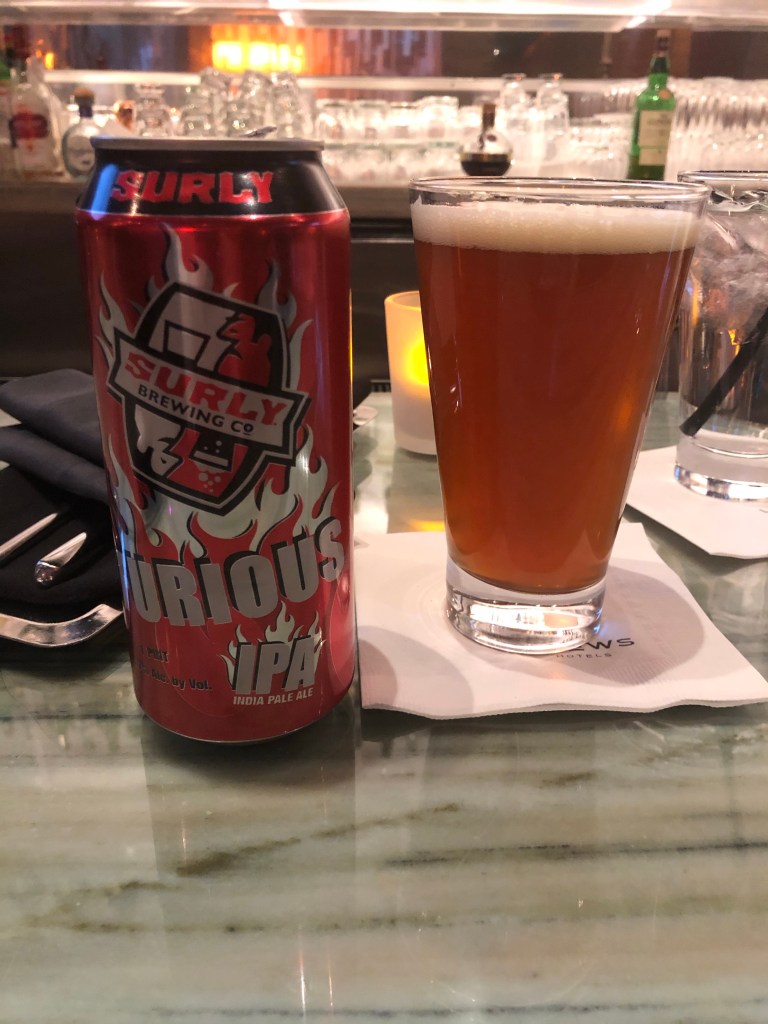
Feb 26, 2020- in Minneapolis traveling for work on a night that I could drink!

For anyone who is “trying” to get pregnant, passively or actively, there is an extra level of awareness regarding your alcohol consumption habits. For the average woman, for whom it takes three to six months to get pregnant, that mean three to six months of carefully curtailing her drinking (especially on the back half of the month as she awaits her pregnancy test results) and politely declining that extra cocktail when out with friends or colleagues. Then, she has another roughly three months (before she’s ready to share her news publicly) after viewing her positive pregnancy test to silently celebrate while avoiding social occasions wherever possible, so as to avoid the continuous confrontation and questioning as to why she is not drinking.

For the woman who spends multiple years trying to get pregnant or continuously getting pregnant and then miscarrying, this three to nine month period can multiply into roughly a thirty month period… or at least it did for me. It becomes a battle of whether to hide herself away from all drinking-related situations, to decline that glass of wine over and over while watching friends exchanging knowing glances “oh, she must be pregnant”, or to just say “screw it, I’m probably not pregnant this month anyway” and continue to imbibe when the situation calls for it.

Every pregnant woman you talk to has her tricks, some of which work and some of which are extremely obvious. But even when the latter, her friends are generally tactful enough to ignore the obvious questions, and wait the extra month or so until she will inevitably share her exciting news. One woman I spoke to used to go to work functions, and bring a bottle of grape juice out with her. She would carry her glass of red wine into the bathroom, pour it out, and re-enter the party with a glass of grape juice. Another friend would just swish her beer or wine around in her mouth, so it appeared that she was drinking, before spitting it out. And countless others would sit close to their spouse, who would then have the pleasure of drinking for two, while trying to keep it together. 

All of these ideas can work in a group setting, or when you have a partner in crime to strategize with you. But I found that in the work world, especially in my work of marketing and advertising, there are more occasions to drink socially with colleagues than not. And many of these are intimate situations where you can’t just carry your drink into the bathroom.

I’ve also learned that for some reason, people get very uncomfortable when you choose not to drink with them in social situations. For example, at a former company I worked at, my husband and I attended a team-building event with my co-workers at a Cubs game. He and I were having a “dry August”, completely unrelated to childbearing, but just to get our bodies back to a healthy place. Anytime we declined a drink we were offered or said we were taking the month off from drinking, co-workers of all ages and levels in the organization were appalled.

“Come on, it’s a special occasion!” they would say. To which my inward response was, “I’m 30 years old, I live in a big city, and I don’t have any kids… Every night seems to be a ‘special occasion’ for a drink.”

I have memories of three particularly challenging social occasions in the work-world when I had to openly decline drinks. Each of these moments, I felt like all eyes were on me and like I was divulging a secret that I was really not prepared to share. I was not only trying to get pregnant but, in fact, was pregnant on all three of these occasions.

The first was in February of 2017. I had just found out I was pregnant- for the first time- confirmed with my doctor, a few weeks prior. I had been with my company for only six months, and we were attending an all Principal-level and above Strategic Analytics team summit in Miami. Now first of all, at that time there was the whole Zika virus scare in Miami… so I was already a little uncertain of this choice of venue. Of course, as part of an analytics team, I was one of few women to begin with. Then lets layer in the fact that this was senior leadership level only- that meant even fewer women, and you could count on one hand the number that were still of reasonable childbearing age. So I am certain that the choice of Miami and the presence of Zika were not even factored into consideration. Not ready to express why I was hesitant to attend this mandatory summit, I figured we would be inside the hotel conference center 90% of the time anyway, and I would dress modestly and do my best to fend off all mosquitoes in sight.

After the whole day of collaborating, listening to speakers, and learning about new team capabilities, it was time for team bonding and unwinding. We were all on the rooftop and everyone had a drink in hand. I was still getting to know my teammates and so, some liquid courage certainly wouldn’t have hurt me. But I ordered a club soda with lime, and figured all those drinking wouldn’t take any notice that there wasn’t vodka in my drink. Nor did they know me well enough yet to know that I would never be drinking a vodka soda in that type of team situation- I would be rocking an IPA. So that part was easy enough. But then we came to dinnertime, when we were all sitting at large tables together and one by one, everyone ordered a drink and poured the wine from the table into their glass. I can’t tell you if anyone really noticed my water glass sitting there alone while I casually claimed that I had had enough earlier, but I can tell you that I personally couldn’t stop noticing my lone glass for everyone else’s pair. To make the night even harder, I left the group at one point to go to the bathroom and there it was…. For the first time, but certainly not the last. The blood on my underwear. Just a little at this point, not enough to be sure if it was just a normal thing or if it was to become my first miscarriage. It wasn’t for another week or so that I knew for sure.

Fast forward a year later. Another winter, another new role at a new company, and another trip down to Miami for a conference that included many of the senior leaders in my new organization alongside our top clients. And yes, another pregnancy… my second. This time, I had known my co-workers for an even shorter amount of time. I had just began my new role in November 2017 and now it was January 2018. I remember going to dinner the first evening with one of our Vice Presidents of a key account and her clients, along with two other co-workers who I had barely met. This dinner was all about selling the clients on us as a team: on our chemistry, on my team’s unique measurement approach, on our partnership. Everyone ordered a glass of wine, and so I did too. I proceeded to sit there through dinner and occasionally pick up the wine glass and pretend to take small sips. Obviously, for anyone keeping track, by the end of dinner … my glass was still full. This woman who barely knew me even said out loud, “Michelle, you’ve barely touched your wine” and gave me a knowing look like “I’ve been there before.” Well, if she had been there before, I wasn’t sure why she – a woman with a few kids of her own- was calling me out in front of a group of other men and women. I just kind of shrugged and said that I wasn’t feeling that well. The next night, similar story. Out with a big group at a circular table and everyone with a drink in front of them but me. Luckily, it was a different group and so at least I could take solace in the fact that no one person was tracking and noticing my behaviors over time.

That baby didn’t survive the 10- week heartbeat doctor’s visit either.

Finally, it was the last week of August 2018. I was still at the same company in the same role. I had to travel to Philadelphia for a client pitch. I had teamed up with three other male colleagues, one (a close friend of mine) from my Chicago office, and two others from our London office. I had been working with them on the content for this pitch for about a month, but this was our first time meeting in person. Now, I had found out about a month previously that I was pregnant- for a third time. Then, I had experienced what I thought was my third miscarriage in mid-August (more about that later). Just days before this pitch I had visited my doctor and re-discovered that not only was I still pregnant, but that I had reached the 10-week heartbeat milestone successfully. So there were a lot of emotions running wild.

It was the night before the pitch and the four of us went to a local Philadelphia sports bar. The deck was ready to go, we had rehearsed for the pitch, and we felt ready. In celebration of our preparation to date and to toast the successful meeting we were anticipating, my friend ordered four beers. 

“No, I’m good,” I said. “I’ve been at weddings every weekend this month and I have another this weekend here in Pennsylvania. I’ve just been doing a lot of drinking. My body needs a break.”

Of course, he called my bluff and heckled me in a way that only a friend can get away with.

“What are you talking about? Of course you are going to celebrate with us – I know you, you won’t turn down a beer!” He laughed.

There was only so much I could fight this without making a scene and so eventually I gave in and the four beers appeared on our table. We all toasted and everyone took a sip. Well, everyone except for me … who took a very fake sip. As dinner continued, everyone finished up their beers and went to order more. Unsurprisingly, they noticed that I hadn’t touched mine because, really, how do you hide it in a small group setting? And so, again after teasing me and giving me a hard time, they poured my beer into their glasses.

To be honest, I don’t remember the exact conversation that ensued at that point, but I do remember finally getting frustrated enough to my friend to say, “You know, you really can’t call someone out for not wanting to drink with you. Especially not a woman.”

When I got back to my hotel room that night, an apology text was waiting for me. My friend had told me that he was sorry that he had been so stupid, and that he hadn’t even thought about it. It was okay, I told him. But by now I was certain he had guessed my secret …. That I was pregnant. This was at a time when I was still high-risk and wasn’t ready to share with anyone other than my husband. Not my friends, not my family, and certainly not my co-workers. Luckily for me, that moment and that secret never left that sports bar, that is not until many months later when everyone knew the news of my pregnancy. But it felt for a moment like a bit of my privacy had been openly exposed in a workplace where I was trying so hard not to be vulnerable.

So when you come out to meet me for a drink after work and you say you just want water, believe me, I know your heart is racing as you wonder what kind of look you may or may not get. I understand that my beer probably looks pretty good to you (or maybe you are dealing with first trimester nausea and it really doesn’t!). And I know that if you haven’t shared your news yet, it means you aren’t ready to. And I respect that. I know this won’t make that moment any easier for you or make you feel less like you are on stage for all to see, but at least know that you aren’t alone in feeling that way.

“Fed is Best”… When Returning to Work

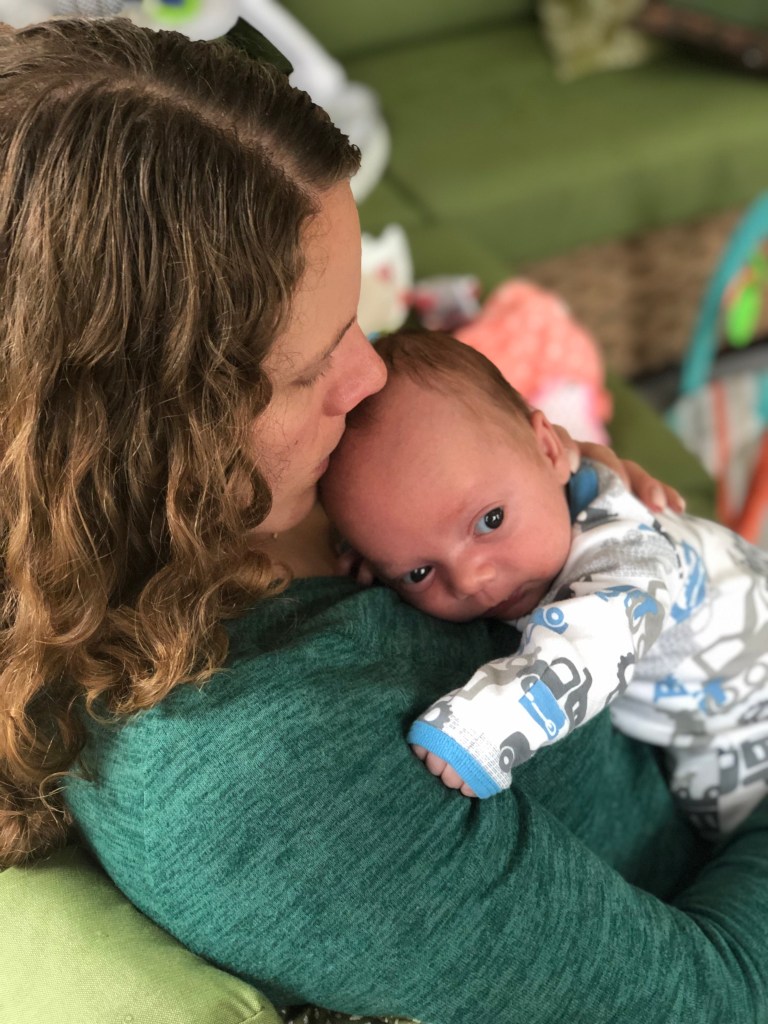
May 3, 2019- Stealing a snuggle from my little boy after a feeding session

As many of us quickly learned, either when we became moms or even before our babies were born, there is a huge debate out there regarding the pros and cons of breastfeeding versus formula feeding. When many of us were growing up in the 1980s, formula-feeding had become a highly accepted trend. Now, with the increase in breastfeeding advocates chanting that “breast is best” and sharing the scientific research that shows that mom’s milk can offer unique nutrients and help baby to better fight against viruses, there has been a big shift back to breastfeeding.

With these two competing points of view, many of the women I have met have “picked sides.” I have witnessed an immense amount of mom-shaming for women who choose one path versus the other. And for some reason, this highly personal, vulnerable act of nursing a child has become a highly acceptable topic for people to weigh in on. And not just women- but men too. I have found it shocking how many men I have met that feel they have the right to dictate how their partners should nourish their babies, with no consideration as to the physical and emotional toll this choice may have on the women and their lives.

After I adopted Keira, one would think I would have escaped this discussion. Naturally, I was not producing milk and therefore it was no surprise that she would be entirely formula-fed. Yet still, once I shared the news that I was pregnant with Jackson (with Keira just a baby still herself), I got questions: “so, if you are pregnant, can you trick your body into producing milk early so you can nurse her?” Even further still, once Jackson was born and Keira was 4 ½ months old, I was occasionally asked, “so now that you are nursing him and producing milk, will you shift from bottle-feeding to breastfeeding her too?”

Not to mention the questions I received on how I would choose to feed Jackson, both while I was pregnant and after he was born. One woman in my life would regularly text me to ask how things were going, and if I was still nursing or had switched 100% to the bottle. What impact it had on her, I still have yet to determine.

Anyway, I went into my delivery with the point of view that I would feed the baby boy who would soon become my Jackson however worked best for both him and me. For the first 5 months of his life, I found that the “what worked best for us both” was a combination of nursing and formula-feeding. My son latched well, seemed to prefer breast to bottle (particularly at bedtime), and we were enjoying these moments together. This was fine when he was young and required no more than 2 ounces of milk per feeding. Yet we quickly learned that regardless of how much I pumped in between feedings, I was unable to produce those 4, 5, 6 ounces at a time that he soon grew to require. So I would nurse him first, and then top him off with a bottle. This kept my son fed and growing, and it helped me to feel I was providing for him as best as I could without simultaneously feeling tethered to my portable pumping machine and needing to be within a few steps of a private space where I could attach those suction cups to myself and sit, waiting passively, hoping the bottles would fill with a reasonable portion of milk.

There are many thoughts and stories I could share about those early days on maternity leave between nursing, pumping, and formula-feeding and the freedom I felt every time I empowered myself to leave my house or to leave Jackson, knowing I could hand him a bottle and that he wouldn’t go hungry. But I think a lot of that has been discussed at nauseum.

The bigger issue that I didn’t consider until I was living it was what happens after you return to work from maternity leave. How do you make sure your child is fed while still being able to do your job to the best of your ability? Let me start by saying- it was maybe the toughest part of transitioning back to work and I am not sure there is one right solution.

As I shared previously, my office had one Mother’s Room on my floor which required key card access. When I returned back to work, I was sharing that room with one other recent mom. We had to coordinate, whether over slack or email, to make sure that we weren’t in need of the room at the same time. Now let’s think about it for a moment. I was leaving my house at 7 AM each day and getting home at 5. So the latest I could have reasonably fed Jackson before leaving for work was 6:30 AM. That means I had a 10 ½ hour gap between when I could feed him to end the morning and to kick off the evening. If I wanted to pump on a schedule that matched Jackson’s feeding schedule at the time, I had to make sure I pumped at least two times during the work day… maybe even three. Realistically, I knew that three was never going to happen, so two was the goal. Ideally I would go into the Mother’s Room sometime around 10AM and another time around 2PM. Indeed, the other mom in the office was managing to a similar schedule.

Now, I don’t know about you, but my days are nearly 100% filled with internal and client meetings back to back to back. I often have colleagues ask me “Are all of those meetings on your Outlook calendar real or do you have some flexibility?” Some of these meetings are on the phone, so in theory, I could try to align my pumping time with my phone call meetings and do both at once. In reality, as much as these brands advertise their “silent pumping mechanisms”, there is nothing silent about this process. I really did not want to be the person on the phone with a consistent, mechanical sound in the background who had to focus on muting the phone at all moments when she wasn’t speaking. Even if I did do this, inevitably an in-person meeting would run over time or something else would get scheduled and I would lose my window to go to the Mother’s Room. Many of those two time target days morphed into one.

Now once you find the time and the place to engage in pumping, there’s the whole issue of what to do after. You can go to the sink and clean out all of your materials for the next use. You can use the fun trick of filling Ziplock bags with your “gear” and putting them in the refrigerator as a temporary between-sessions solve. And then of course, at the end of each day you have to take your pump home to clean all of the parts out to start over again.

I would go through all of this, and I would go through all of it discreetly, because I didn’t want to be the person explaining to the young men who report to me or the senior leaders that I reported into that I would be late to our meeting because I had to go pump.

Then, the most heartbreaking part of it all. I would go through this process of pumping for twenty minutes or so, and look at the bottles to see that I had produced anywhere from 1.5-2 ounces per session. I would carefully combine the two bottles because, in my mind, every last drop was a meaningful contribution to feeding my son. That means in a work day, I could take home anywhere from 3-4 ounces that evening, or enough to feed my son one breast-milk bottle the next day while I was at work. Inevitably, during the hours I was at work, he required three bottles. So for every one bottle of breast milk, he was being fed two bottles of formula. I would advise my mom and the sitters who were taking care of Jackson at the time to make sure that they fed him the breast milk bottle at a time when they knew he would be really hungry and finish it all. Because what a tragedy it would be for him to drink the milk I had worked so hard to produce, and decide to stop after two ounces, rendering the remaining milk undrinkable after another hour passed. At night, when I was home, we would go back to the combination routine.

When I first returned to work after Jackson’s birth, I was part-time, so this was sustainable for a while. When he was about 10 weeks old, I opted to travel on a work trip to London. I was only working two days a week at the time, so this wasn’t really expected of me, but the trip was a big opportunity. Our Global CEO would be present, as well as all of the Global Senior Leaders, including our Regional CEOs. We would be talking about our data strategy and our tools and technological solutions. Essentially all of the things I spend most of my work day focused on.

I was still nursing Jackson, and I was determined not to let this trip throw off our routine. I would be leaving on a Tuesday evening, and returning on a Friday morning. So I had to get through roughly 2 ½ days. I brought my pumping machine filled with a number of frozen ice packs. On the plane ride from Chicago to London, I took one break to sneak my way into the airplane bathroom for pumping session number one. I found myself crammed in the bathroom, hoping there wasn’t a long line of people waiting to use it behind me that could hear the faint “err err” mechanical sound. When I finished, I packed my bottle away in my pump bag until I made it to London.

I had an overnight flight and so I landed at Heathrow in the morning. Instead of going straight to our offices for the meeting, I first stopped at my hotel. I asked for an early check-in to clean out my pump and was hoping to store the milk I had pumped that had been on ice for the past couple of hours. Well, I learned that our hotel rooms didn’t actually have refrigerators, but the concierge had one upfront and would gladly store my breast milk for me. This meant that every time I had a new sample to add to my collection, I had to stop at the concierge’s desk and once against have a conversation regarding my breast milk, often with a different concierge.

We had two full days of meetings and they were just great. I was completely energized to be participating with some of our most capable colleagues and to be looking for ways to collaborate and bring our North American ideas across the globe. Let’s be clear- I was thrilled to have attended and it was absolutely the right choice for me from a visibility standpoint within our organization, a reputation standpoint in showing what I could contribute, and a personal growth standpoint in hearing from others.

But I had to leave these all day meetings a few times a day to pump, and then store my breast milk in a communal office refrigerator for the day before running to my hotel to drop it off before dinner. And where did I have to do this pumping? In the women’s room. Yes, the multi-stall, public office women’s room, where anyone in an adjacent stall could take a pretty good guess as to what the sound they heard was and anyone waiting for a stall would notice the same set of feet under the door for twenty straight minutes. Why was I pumping in the women’s room? When I asked the office administrator if they had a Mother’s Room in the office, her answer was a very apologetic no. But didn’t I understand that in the UK, women had a one-year maternity leave, so the idea of a Mother’s Room was completely frivolous? Of course.

By the end of my 2 ½ day trip, I had produced a few full bottles of breast milk that I would bring back home to Jackson. I remember going through the security line in the airport and alerting the TSA agent that there was breastmilk in my bag, as you are told to do. She had to take it out of the bag and examine it quickly. And I still remember her asking, “is this all of it?” holding the bottles up to me. Obviously she didn’t mean anything by this really, but in that moment I felt so deflated. Yes, I had gone through carrying ice packs, pumping in bathrooms, talking to concierges, washing my gear in my small hotel bathroom, and flying across the Atlantic Ocean with my “bounty” all for just a few bottles to feed my son.

When Jackson was five months old, I went back to work full-time. By this time, Jackson was drinking six ounces of milk in a meal, and I was still producing far less than that per pumping session. I realized that it was time to shift 100% for formula feeding him. Part of me still judged myself for this and questioned why I couldn’t make it all work. But a much bigger part of me felt a wave of relief. My workday would now be my own and I wouldn’t have to work these sessions into my days. My son would still be fed and would still be growing. There were so many parts of my life that I was willing to sacrifice or shift for my children, but this was one freedom in my life that I could take back.

Every woman’s experience is different and that very colleague that I shared the Mother’s Room with did “make it to a year” of breastfeeding her new child. Which was great – for her. If it works for you, fantastic- you do you and I hope you feel the satisfaction of feeding your child in the way you believe is best that fits within your life. But I urge other moms not to beat themselves up if breastfeeding just isn’t a realistic option for them when they go back to work full time. Making it to a year of nursing should not be worn like a badge of honor for moms who are secretly miserable with their choice. Whatever choice you make, make it work for you because “fed is best”… especially when you return to work.

Today’s Working Woman… Can She Have it All?

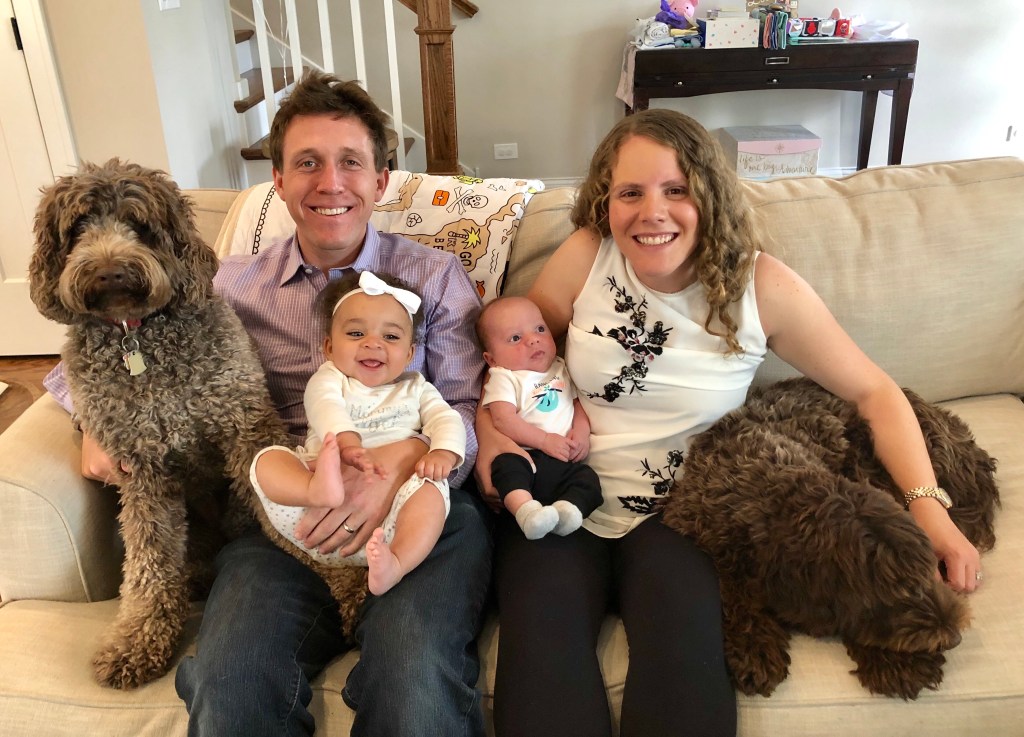
May 12, 2019- My first Mother’s Day as a Mom to human babies and also my 7 year wedding anniversary

My senior year of college, I enrolled in an Economics seminar as part of my major. In the course, each student was to choose two of the topics amongst a list of topics to write a report and then present their takeaways to the rest of the class. This was one of the topics I had chosen.

It was a question that intrigued my 21-year old self, before I even knew where I would land my first job or whether I would have a family with my then-boyfriend (now husband), also taking the seminar.

Now, over a decade later, I am working every day to prove to myself and all of the other women out there asking themselves the same question that yes, it is possible. And we shouldn’t be embarrassed or fearful to strive for it. There is absolutely nothing wrong with wanting to have it all, as long as we recognize that it requires a commitment to self-preservation, to constant reflection, and to continuous action.

Willy Wonka: “And Charlie, don’t forget what happened to the man who suddenly got everything he’d ever wished for.”

Charlie: “What happened?”

Willy Wonka: “He lived happily ever after.”

A bit about me. I am 33 years old and I am a Senior Vice President and Head of the Marketing Science & Analytics division at a marketing agency in Chicago. I live on the northwest border of Chicago and I commute downtown 4 days a week (when I’m not traveling). I am an Associate Board member of two local non-profit organizations in the city of Chicago. I am a dog mom to two Australian Labradoodles, Riley (5 ½) and Hershey (2). And I am also a mom to my adopted daughter Keira (15 months) and to my biological son Jackson (11 months). That’s right: I have two babies that are 4 ½ months apart in age.

When I first entered into motherhood, I looked around me for mentors, for guides, for inspiration. I knew what great moms looked like from childhood. I grew up surrounded by them, between my mom, my aunts, my friends’ moms. My own tribe of women were also slowly becoming moms themselves, but as I looked around, I realized that I was the first of my friends in the Chicago area to become a mom.

As I thought about it more, I realized that even though I knew what great moms looked like, I didn’t have any examples in my life- past or present- of great moms who looked like the kind of career mom I wanted to be. I realized that I really had no one I could look up to who had experience balancing both career and momhood, and no one even to relate to who was in a similar situation to mine.

Now, what do I mean by that? Well, my own mom was a full-time mom growing up; she had worked for 15 years prior to having me, and then shifted her priorities to dedicate 100% of her time to me. Similarly, most of my aunts and the moms of close friends were full-time moms. I couldn’t look back to my childhood for inspiration on how to juggle getting yourself ready for work in the morning while babies were crawling around your bathroom, trying to enter the shower and play with a trash can full of feminine products. I couldn’t get advice on how to flip the switch on your brain from when you leave the office with the stress of the day weighing on you to when you enter a house of giggling babies clapping because they are so happy to see you. And I couldn’t ask how these women could balance attending out-of-town meetings for which they were in high demand with being home for wake ups and bedtimes.

So I considered women currently in the work force. Surely, I could derive inspiration from these strong female co-workers, many of whom became moms many years before I did. Well, as I did my own internal audit, I quickly discovered that many of the women in senior leadership roles that I interacted with in fact weren’t actually parents at all. I turned to two who were. I asked the first how she managed it all of these years – being a powerful woman in business and a mom at the same time. How did she juggle traveling to meetings with the kids’ travel sports teams? How did she balance the late nights at the office with the late nights cramming for a history test?

“To be honest,” she told me. “My husband was never very ambitious. So he was always there to take care of those things. If we had both been ambitious in our careers, I am not sure what we would have done.”

A few weeks later, I had a conversation with another woman in a mid-level management position and expressed some of the internal noise going through my head. I wanted to get her point of view on work life / mom life balance. At this stage, her kids are both grown and in college.

“It was hard. I actually ended up taking 7 years off from the work force. I really didn’t have a choice,” my co-worker shared. “It definitely stagnated my career growth.”

This all made me realize that for this new generation of moms- those of us who are highly educated, highly ambitious, and highly interested in having a family- we don’t have a ton of role models. We don’t have other women to look up to for advice on how to navigate our new normal of being a mom and a businesswoman. And I don’t say a “working mom”, because that implies that we are a mom first (mom as the noun) and that working is just something we do. But no, we were businesswomen first and we established ourselves as experts at something externally before we ever became moms.

Shortly after re-entering the work force I bonded with another co-worker in a similar level role with a baby a few months older than my own. What did we bond over? Our shared Mother’s Room experience. You see, our floor in our office, like many offices, has one Mother’s Room that nursing moms can share to pump during the work day (more on that later). Anyway, she and I were both using the room and would “slack” or email one another throughout the work week to coordinate schedules. We realized that our entire relationship had revolved around breastfeeding and so, we resolved to get coffee. During our coffee date, I realized that she faced many of the same challenges and pressures as me. But it still wasn’t exactly the same. During that coffee date, I also learned that her husband had opted to be a stay-at-home dad. That meant that we could commiserate over pumping during the work day, over still waking up twice a night to feed before waking up at 5:30 AM to start our day, and over having 25 hours filled for every 24 hour day. But she hadn’t needed to monitor traffic patterns daily to make sure she made it home to her kids by 5:00 PM on the dot before childcare ended. She didn’t have to worry about pushing her work flights to 9 AM instead of 7 AM to make sure that one parent could be there in the early morning while her husband had a pre-6 AM departure time for work. And she didn’t have to build a shared calendar with her husband to make sure that their work travel trips didn’t overlap.

I say none of this to diminish any of these women, their stories, and their accomplishments. I say it to clarify that, especially for me, as one of the first in my peer group to navigate this new space, I realized how many things I have had to figure out on my own. And how many things that haven’t gone exactly as I would have liked- at home and at work- that I have had to roll with and be okay with.

And so, in the weeks that follow, I will dive into a combination of topics and stories revolving around being a woman in business and being a mom. Some topics straddle both and some are focused only on one. I can talk about what it’s like to grow in an organization from entry-level to a leadership position, and what it is like to reach that type of position of power and influence at a young age. I can offer a point of view on being a woman in a male-dominated industry (first consulting, then analytics). I can offer solace and relatability for women who are struggling with fertility issues, recurring miscarriages, high-risk pregnancies, and the adoption process. I can make the woman wondering how they will ever survive with “two under two” see that it is possible to survive, even with “two under one.” I can share my experiences on preparing for maternity leave, returning from maternity leave, traveling for work overseas while still nursing, traveling domestically and internationally with babies, welcoming an au pair into our home, and focusing on growing and inspiring my team at work. I can discuss ways that I find time- and times that, quite frankly, I don’t find time- for working out and for staying involved in my charity work.

I’d like to think that some of what I have discovered along the way, along with some of my funny, devastating, and heartwarming anecdotes, may offer encouragement for the others walking alongside me or after me. At the very least, it can serve as confirmation that you are not alone, you are not the first, and you won’t be the last to try to have it all.

Design a site like this with WordPress.com
Get started